Predicting recruitment success in social care
Helping a large UK care provider find the applicants most likely to start and stay, from thousands of applications a week.
- Year
- 2023
- Context
- Group project with HC-One, Newcastle University
- Tools
- R, rpart, PCA, Power BI
The problem
HC-One receives 2,500 to 3,000 job applications a week, but only around 3% of applicants go on to start. Recruiters spend most of their time on candidates who never arrive.
Approach
- Defined a success score for past hires by combining normalised length of service with contracted hours, then split it into quartiles.
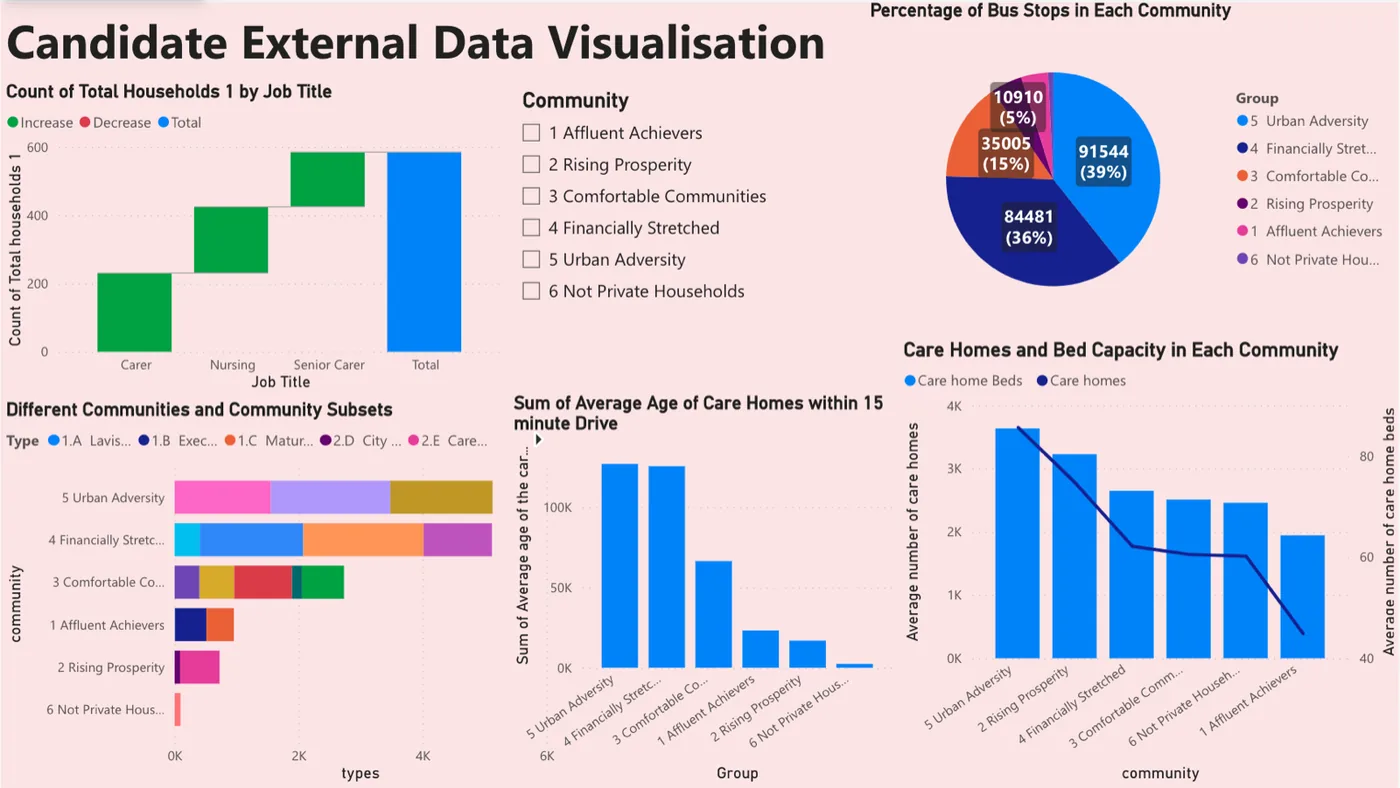
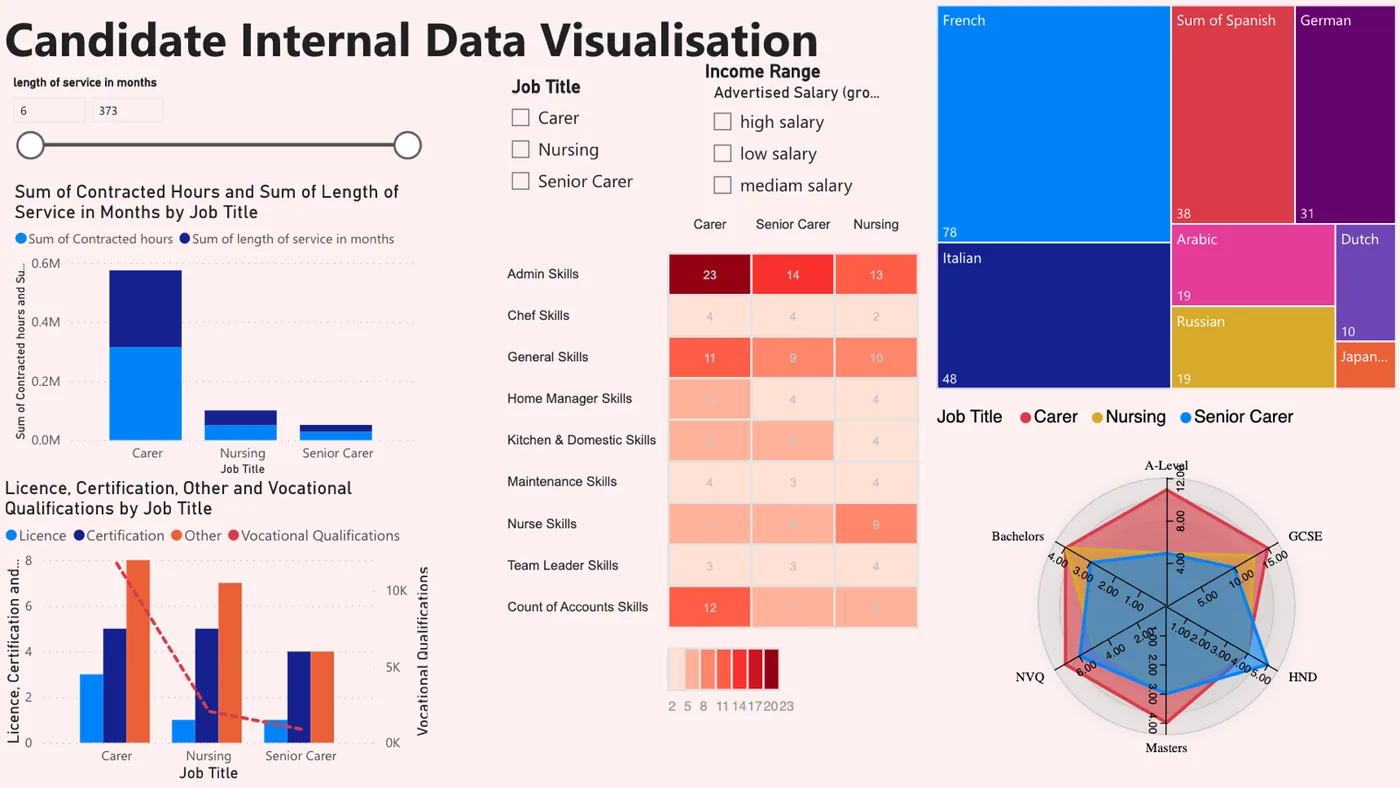
- Built two Power BI dashboards. The internal one profiles candidates by role, skills, languages and qualifications. The external one covers the wider labour market.
- Used principal component analysis (PCA) to find which application features carry the most signal.
- Trained a decision tree (rpart) for each role, on a 70/30 train-test split, to predict which quartile a new applicant is likely to land in.
The outcome
A clear, explainable way to prioritise applicants, so recruiters can spend their time on the people most likely to start and stay. Decision trees were chosen on purpose: a recruiter can read every rule.